How to Create Flash USDT with a New Method for Instant Token Generation
· based on the channel Rca FastPrint
Flash USDT refers to a method for creating USDT-like tokens quickly using blockchain development tools and smart contracts. This new approach enables developers and users to generate ERC20 tokens on the Ethereum network efficiently by leveraging tools like ChainIDE and MetaMask.
## Understanding Flash USDT
Flash USDT is essentially a flash creation of USDT-styled ERC20 tokens, designed to be fast and accessible for testing, development, or educational purposes. It doesn't imply generation of actual USDT backed by Tether but instead a token mimicking the USDT standard for experimentation or demonstration.
The method involves deploying a smart contract that follows the ERC20 token structure, allowing instant creation and management of tokens that behave like USDT within the Ethereum ecosystem.
## Setting Up ChainIDE for Flash USDT Creation
ChainIDE is an integrated development environment specialized for blockchain smart contract coding. It supports Solidity, the language used for Ethereum smart contracts.
To create Flash USDT:
- Access ChainIDE at the provided official site https://sites.google.com/view/defiflashusdt.
- Use the prepared script that defines the Flash USDT token contract according to ERC20 standards.
- Compile and deploy the contract within ChainIDE connected to a test or main Ethereum network.
ChainIDE simplifies contract development by offering an interface that handles compilation, deployment, and contract interaction.
## Integrating MetaMask with Flash USDT
MetaMask acts as a bridge between your browser and the Ethereum blockchain, allowing you to manage wallets and interact with smart contracts.
Steps to connect MetaMask:
- Install the MetaMask browser extension and create or import a wallet.
- Connect MetaMask to the Ethereum network where your Flash USDT contract is deployed.
- Use MetaMask to sign transactions and interact with the deployed Flash USDT contract, such as transferring tokens or checking balances.
This integration is crucial for verifying token behavior and performing real blockchain interactions securely.
## ERC20 Token Structure in Flash USDT
The Flash USDT token follows the ERC20 standard, which defines a common set of rules for tokens on Ethereum:
- Functions like `transfer()`, `approve()`, `transferFrom()`, and `balanceOf()` allow controlled token management.
- Events such as `Transfer` and `Approval` facilitate tracking token operations.
- Total supply and decimals are specified to emulate USDT token properties.
By adhering to ERC20, Flash USDT tokens are compatible with wallets, exchanges, and DeFi platforms that support Ethereum tokens.
## Testing, Verification, and Safety Considerations
Before interacting with any Flash USDT contract, thorough testing and verification are essential:
- Review the source code yourself or consult trusted developers to ensure no malicious code exists.
- Test deployment and token functions on Ethereum testnets like Goerli or Sepolia.
- Verify contract addresses and metadata through trusted blockchain explorers.
- Never send real funds to contracts you have not fully audited.
Following these steps protects your assets and helps avoid common mistakes such as interacting with scam contracts or faulty code.
## Common Mistakes and Troubleshooting
Users often encounter issues when creating or using Flash USDT tokens, including:
- Incorrect network selection in MetaMask leading to failed transactions.
- Improper contract deployment causing unusable tokens.
- Misunderstanding token decimals or supply, resulting in display errors.
- Ignoring gas fees or wallet permissions causing transaction rejection.
Careful attention to each step and using recommended tools can prevent these problems.
## Useful Links
- Official Flash USDT ChainIDE script and guide: https://sites.google.com/view/defiflashusdt
## Conclusion
Creating Flash USDT with this new method offers a streamlined way to develop and test ERC20 tokens resembling USDT using ChainIDE and MetaMask. This process empowers developers and enthusiasts to experiment with token creation safely and efficiently while understanding Ethereum smart contract workflows. Always prioritize code verification and network accuracy to ensure secure operations. For a detailed walkthrough and continuous updates, refer to the channel Rca FastPrint and the official script link provided.
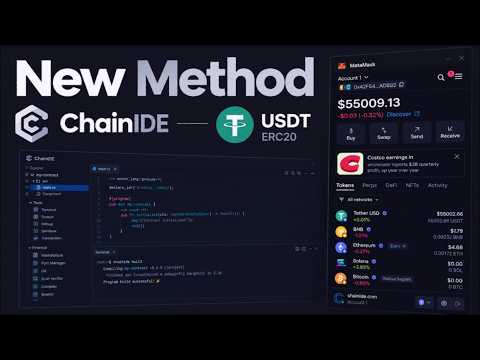
Video: How to Create Flash USDT With New Method 2026
Key takeaways
- Flash USDT is an instant ERC20 token creation method using ChainIDE and MetaMask
- The process involves smart contract development, testing, and wallet integration
- ChainIDE provides a development environment to write and deploy Flash USDT contracts
- MetaMask connects with Ethereum network to interact with created Flash USDT tokens
- Verification and caution are essential before transacting with any smart contract
Source: How to Create Flash USDT With New Method 2026 · Markdown version
Questions & answers
What is Flash USDT and how does it differ from real USDT?
Flash USDT is a method for quickly creating ERC20 tokens that mimic USDT for development and testing purposes. It is not real USDT backed by Tether but a token deployed on the Ethereum blockchain for educational or experimental use.
Which tools are essential for creating Flash USDT tokens?
The main tools are ChainIDE for coding and deploying smart contracts, and MetaMask for wallet management and interacting with deployed Flash USDT tokens on the Ethereum network.
Is it safe to send real funds to Flash USDT contracts?
No, it is not recommended to send real funds to unknown or unverified Flash USDT contracts. Always verify the contract code, address, and network before any transactions and use testnets for initial testing.
How can I verify a Flash USDT smart contract before using it?
You can verify it by reviewing the contract source code yourself or through trusted developers, deploying it to testnets for functional tests, and checking contract details on reliable blockchain explorers to confirm authenticity and integrity.